

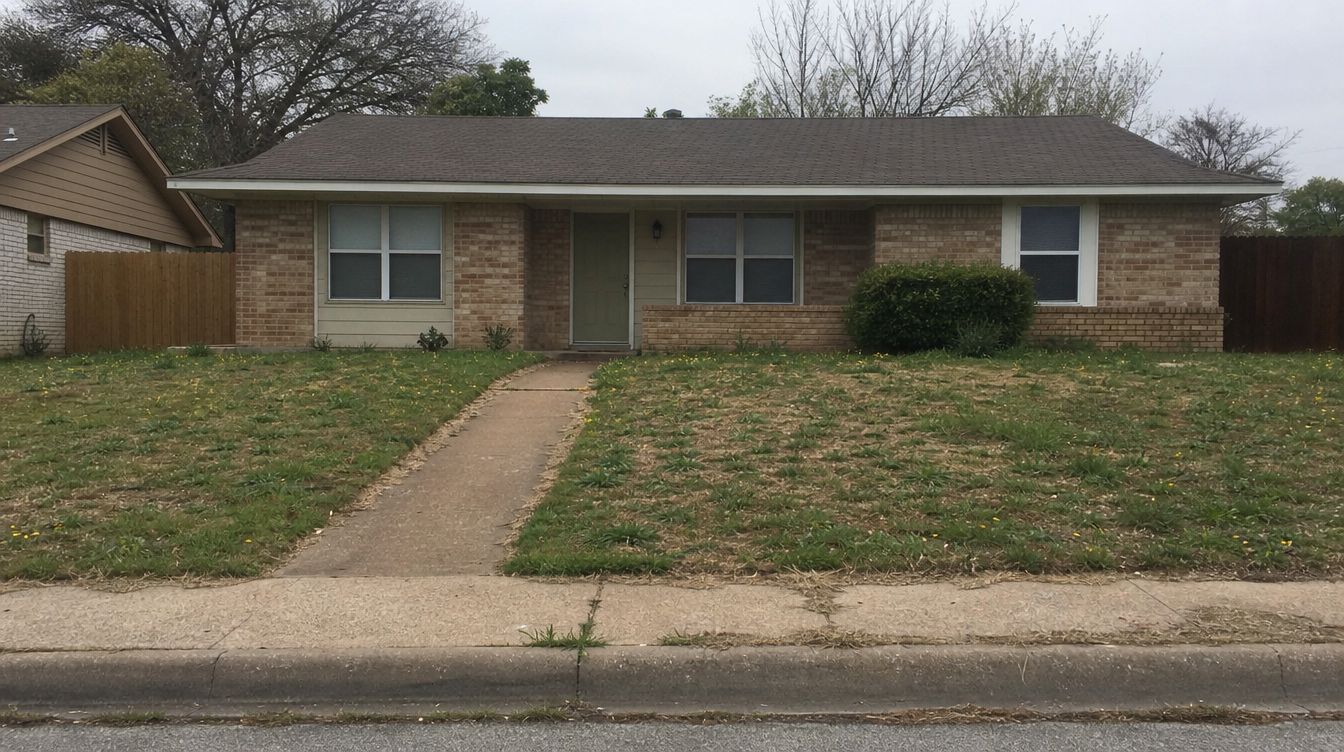
A brown spot in the lawn is a symptom, not a diagnosis, and the four most common causes around Rockwall County have four completely different fixes. Fungicide does nothing for grubs, insecticide does nothing for a clogged nozzle, and water makes some problems worse. Ten minutes of detective work saves a season of guessing.
Brown Patch: Circles in the Cool, Wet Months
Brown patch, called large patch on warm-season lawns, is a fungus that shows up in spring and fall, when nights turn cool and moisture lingers. It hits St. Augustine hardest. Look for roughly circular patches, from dinner-plate size up to several feet, sometimes with a sickly yellow edge and a greener center that gives a donut look.
The tell is the tug test. Grab affected blades at the edge of a patch and pull gently. With brown patch, blades slip free with almost no resistance, and the base of the leaf is dark and rotted while the roots stay intact. If your patches showed up after a stretch of cool damp weather and the lawn gets evening irrigation, the fungus moved in on your invitation: shift watering to early morning and cut back the frequency.
Grubs: The Turf Lifts Like Carpet
White grub damage peaks in late summer, August into September. The grass browns in irregular, spreading patches that look like drought but do not respond to water, and damaged turf feels spongy underfoot. The test is definitive: grab a section at the edge of the damage and lift. Grub-eaten turf peels back like loose carpet, because the roots holding it down have been eaten, and you will see fat, C-shaped white larvae in the top few inches of soil. A handful of grubs per square foot is normal. Five or more, with turf lifting, means treatment.
Chinch Bugs: Hot, Dry, and Starting at the Edges
Chinch bugs work St. Augustine in the hottest, driest part of summer, and they start where the lawn is hottest: along driveways, sidewalks, and curbs. The damage looks exactly like drought stress, which is how they get away with it. Part the grass at the border between green and brown and watch the soil surface for a minute. The bugs are small and black with white wing markings, and on a hot afternoon you will see them moving. Damage that marches inward from pavement despite normal watering is chinch bugs until proven otherwise.
Or the Sprinklers Are Lying to You
Before blaming biology, run each irrigation zone and watch. A head that stopped rotating, a clogged nozzle, or a spray pattern blocked by shrubs leaves crescent or wedge-shaped dry areas that mirror the coverage gap. The screwdriver test settles it: a screwdriver slides easily into watered soil and refuses in a missed dry pocket. Dry-spot damage also crunches underfoot in a way fungus does not, and it greens back up within a couple of weeks once water reaches it.
If the spot fits none of these patterns, or fits two at once, that is a normal thing to want another set of eyes on. Milliken's crews diagnose lawn pest and disease problems across Rockwall County every week, and identifying the actual culprit before treating is the whole difference between fixing a lawn and funding an experiment. Call (214) 478-6335 if you want us to take a look.
