

Every November somebody asks whether they need their sprinkler system blown out like their cousin does in Ohio. Around Rockwall County, the honest answer is usually no. But that does not mean you can ignore the system, because one part of it is genuinely vulnerable, and it is the expensive part.
Why Full Blowouts Matter Less Here
Up north, irrigation lines freeze solid in the ground, so companies purge every line with compressed air each fall. In North Texas the ground itself rarely freezes more than an inch or two down, and buried lines sit below that. Our typical winter pattern is mild weeks punctuated by short, sharp freezes, with the first real freeze usually arriving around mid-November. Buried pipe generally rides that out fine.
The Backflow Preventer Is the Weak Point
The part that does not ride it out is the backflow preventer, the brass assembly above ground near your meter or along the foundation. It holds water year-round, it is exposed to the air, and brass splits when the water inside freezes. After the February 2021 freeze, when parts of DFW dipped below 0 F for the first time in decades, irrigation companies spent months replacing burst backflows all over the metroplex. Replacement is not cheap, either. A new assembly plus labor typically runs several hundred dollars, measured against a few dollars of foam and ten minutes of wrapping.
Protecting it is simple:
- Insulate it now. Foam pipe wrap on the exposed pipe plus an insulated cover or bag over the assembly handles a typical overnight freeze in the upper 20s.
- Know your isolation valve. Find the shutoff that feeds the irrigation system before you need it in the dark.
- For a multi-day hard freeze, the kind where daytime highs stay below freezing, shut the isolation valve and open the backflow's test cocks and ball valves partway so trapped water can expand without splitting the brass.
What to Do With the Controller
You have two decent options. If your system has a working rain and freeze sensor, and most systems installed in the last 15 years do, it will hold watering whenever temperatures are near freezing, typically below about 37 F. In that case you can leave a reduced winter schedule running. If you have no sensor, just switch the controller to off and water manually when needed.
And do water occasionally. Dormant grass is not dead grass. In a dry winter, running the system every 3 to 4 weeks on a mild morning keeps roots and soil from drying out, and moist soil actually protects grass crowns through a freeze better than bone-dry soil does. Just never let the system run when temperatures are at or below freezing, because icing over your sidewalk is a bad morning for everybody.
A 15-Minute November Checklist
- Wrap and cover the backflow preventer.
- Locate and test the irrigation shutoff valve.
- Set the controller to off, or confirm the freeze sensor works.
- Disconnect garden hoses and cover hose bibs while you are at it.
- Check that valve box lids sit tight so cold air is not pooling on the valves.
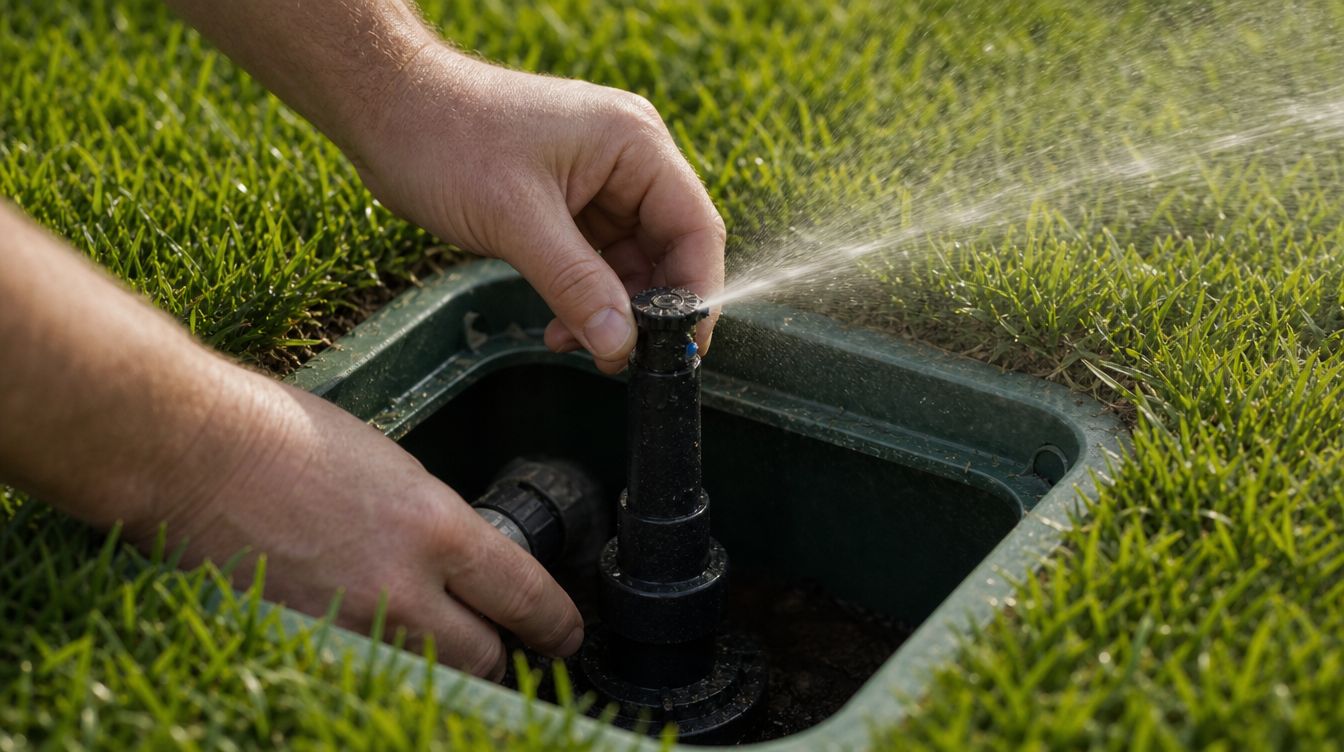
- Walk the zones once and note any broken heads to fix before spring.
If you would rather have a licensed irrigator handle it, or a freeze already got your backflow, Milliken's does sprinkler repair and freeze protection across Rockwall County all winter. It is a lot cheaper to wrap brass in November than to replace it in February.
