

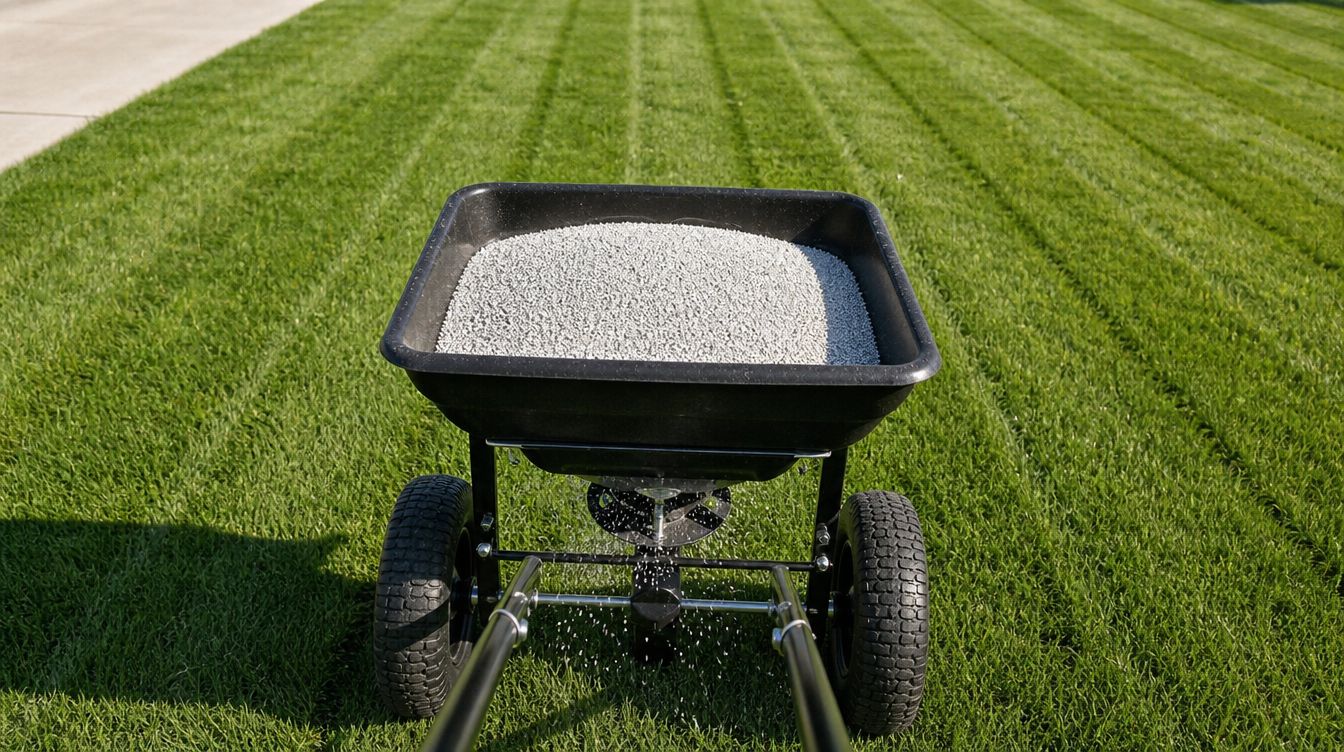
Weed control products split into two families, and understanding the difference explains most of what a good lawn program does. One family stops weeds you will never see. The other cleans up the weeds you are staring at. They are not interchangeable, and the first one only works if the calendar cooperates.
Pre-Emergent: The Invisible Win
A pre-emergent forms a thin chemical barrier in the top inch of soil that stops weed seeds as they germinate. The seed sprouts, hits the treated zone, and never makes it to daylight. That is the whole trick, and it is why pre-emergent feels like paying for nothing: success looks like a lawn where crabgrass simply never showed up.
Two things pre-emergent cannot do. It cannot kill a weed that is already up and growing, and it cannot tell weed seeds from grass seeds, so you skip it anywhere you plan to seed or overseed. One practical note: granular pre-emergent has to be watered in with roughly half an inch of irrigation or rain to activate. A bag spread on the lawn and left dry is a barrier that never formed.
Post-Emergent: The Cleanup Crew
Post-emergents kill growing weeds. Selective versions target broadleaf weeds like dandelion, clover, and henbit while leaving turf alone. Non-selective products kill whatever they touch and belong in fence lines and driveway cracks, not lawns. Post-emergents work best on young, actively growing weeds. A henbit seedling in December dies easily. That same plant blooming purple in March, full grown and setting seed, takes repeat treatments and stubbornness.
One local caution: many broadleaf herbicides stress St. Augustine when daytime temperatures run above about 85 to 90 F, so summer weed treatment on St. Augustine lawns takes a lighter, more careful touch.
The North Texas Calendar
Around Rockwall County the pre-emergent schedule looks like this:
- Late winter, mid-February through early March. Down before soil temperatures reach 55 F, which is when crabgrass wakes up. This is the application that saves your summer.
- Late spring, roughly 8 to 10 weeks later. A booster that extends the barrier through the long germination season for crabgrass and spurge.
- Fall, typically September. As soil cools through about 70 F, winter annuals germinate: poa annua, henbit, chickweed. The purple carpet you see in February was planted, so to speak, back in September.
Why Timing Beats Product
Homeowners agonize over brand names, but the active ingredients in quality pre-emergents all work. What separates a clean lawn from a weedy one is almost always the calendar. A perfect product applied three weeks after crabgrass germinates does approximately nothing, and no post-emergent campaign in June fully undoes a missed February. Watch soil temperature rather than the date on the box, because a warm winter can move the deadline up by weeks.
The other half of weed control is not in a bag at all. A thick lawn, fed on schedule and mowed at the right height, shades the soil so weed seeds never get the light they need to establish. Bare spots, scalped turf, and drought stress are open invitations, and no herbicide fully compensates for them.
This is honestly the best argument for a year-round program: the value is not the bag of product, it is that somebody is watching the soil temps so the barrier goes down on time, every time. Milliken's weed control and fertilization program is built around exactly that North Texas calendar, eight visits timed to what the grass and the weeds are actually doing.
