

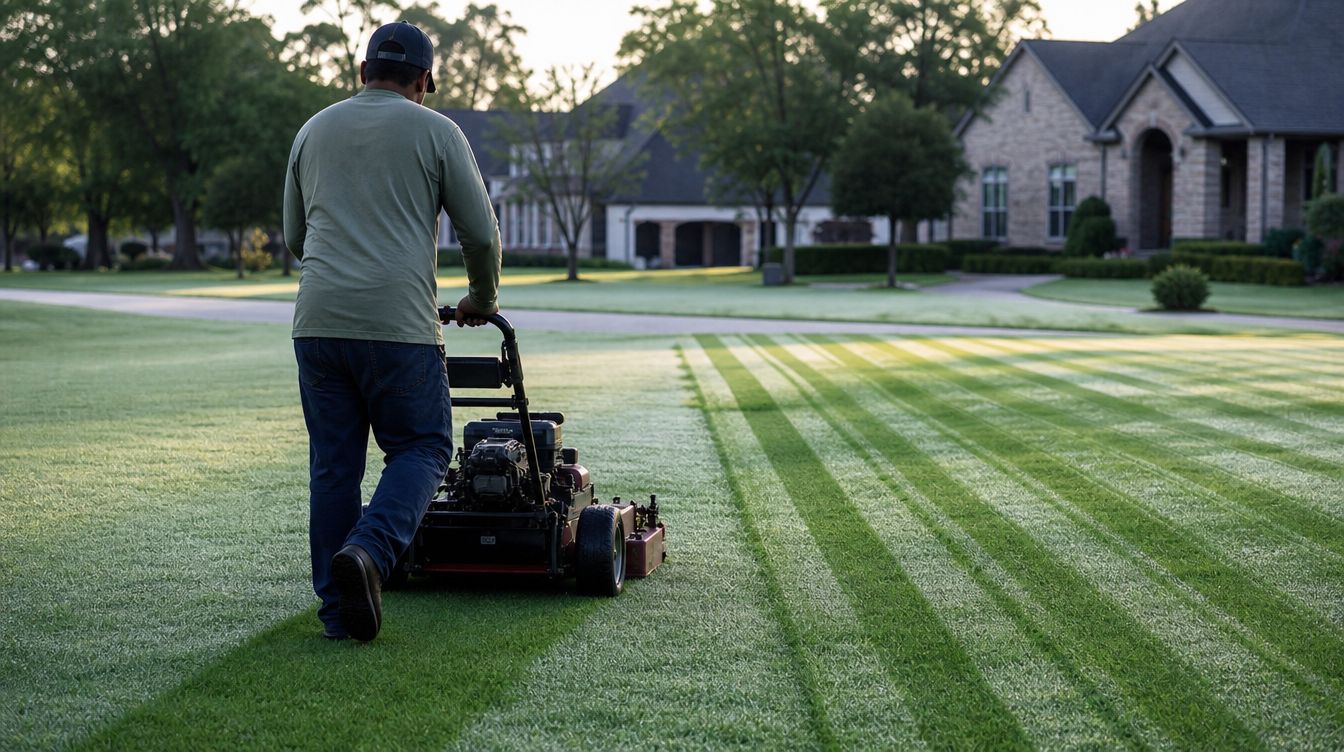
Every year around September, somebody on the street overseeds with ryegrass, and by Thanksgiving their lawn is the only green one on the block. Then every spring, the neighbors quietly notice that same lawn is the last one to look right in May. Both halves of that story are real, so here is the honest math on winter ryegrass in North Texas.
What Overseeding Gets You
Bermuda goes dormant after the first hard freeze, usually mid-November here, and stays tan until April. Overseeding means spreading perennial ryegrass seed into the existing lawn in October, once soil temperatures fall to around 70 F. Rye germinates in about a week, and through the winter you get a genuinely green, growing lawn while everyone else looks at straw.
Beyond looks, rye earns its keep in a few situations. Active winter cover crowds out some winter weeds. Dog owners get mud control, because dormant thin turf on wet blackland clay turns into a paw-print factory. And if you host outdoor events on the lawn, green in December is the whole point.
What It Costs You
The bill comes in three parts:
- Winter work. Rye grows all winter, so you mow all winter, water to establish it, and feed it. The lawn never goes to sleep, and neither does its maintenance.
- Spring competition. This is the big one. In April, exactly when your bermuda needs sun, warmth, and moisture to green up, the rye is thick, cool-season happy, and hogging all three. Overseeded lawns commonly green up two to four weeks behind their neighbors, and a stressed transition can thin the bermuda going into summer. You have to push the rye out, by scalping it down and letting heat finish it, or the bermuda pays.
- The pre-emergent conflict. A September pre-emergent stops ryegrass seed the same way it stops poa annua. You can overseed or you can have fall weed prevention. Not both. Skipping the fall barrier means henbit and poa come along for the ride.
So Who Should Do It
Our take for most Rockwall County home lawns: skip it. A healthy bermuda lawn is designed to sleep through winter, and it comes out of dormancy stronger when nothing competed with it in April. Overseeding makes sense if winter green genuinely matters to you, you accept the mowing and watering, and your bermuda is thick enough to absorb a slow spring. One more note: do not overseed St. Augustine at all. Its dense canopy takes seed poorly and the spring transition is harder on it than it is worth.
If You Decide to Do It, Do It Right
Wait until nights cool and soil temperatures settle near 70 F, usually mid-October around here. Mow the bermuda short and bag the clippings so seed can reach soil, then spread perennial ryegrass, not the cheap annual rye, at about 5 to 10 pounds per 1,000 square feet. Water lightly once or twice a day until it comes up, usually within a week, then ease back to a normal schedule. Come April, drop the mowing height and cut the rye hard so heat and competition finish it off before your bermuda pays the price.
If you do go the ryegrass route, plan for mowing straight through the winter, because rye at 3 inches in January still needs a weekly cut. Milliken's mowing and maintenance crews keep lawns cut on whatever schedule the season demands, and we are glad to talk through whether overseeding fits your yard before you buy seed.
