

Fall is when next year's lawn gets decided. The work you do between September and the first freeze, usually around mid-November here, determines how thick the grass wakes up in April and how many weeds greet you in February. Four jobs matter, and the windows for each are shorter than they look.
Time the Last Feeding Right
Bermuda and St. Augustine should get their final nitrogen about 4 to 6 weeks before the average first freeze, which puts the last real feeding in late September or early October for Rockwall County. That feeding helps the lawn store energy in its roots for winter. Push nitrogen much later than that and you force tender new growth just in time for a freeze to burn it. Many programs finish the year with a potassium-heavy winterizer application instead, and that is a sound practice on our soils: potassium supports cold hardiness without pushing leaf growth.
Get the Fall Pre-Emergent Down in September
The winter weeds that embarrass lawns in February, the purple henbit, the chickweed, the pale seedy poa annua, all germinate in fall as soil temperatures drop through about 70 F. A pre-emergent applied in September stops them underground. Miss the window and you will be fighting those same weeds with post-emergent sprays all winter, which is the harder, uglier version of the job. One caveat: skip the fall pre-emergent anywhere you plan to overseed ryegrass, since it cannot tell the difference between seeds.
Manage Leaves Before They Manage You
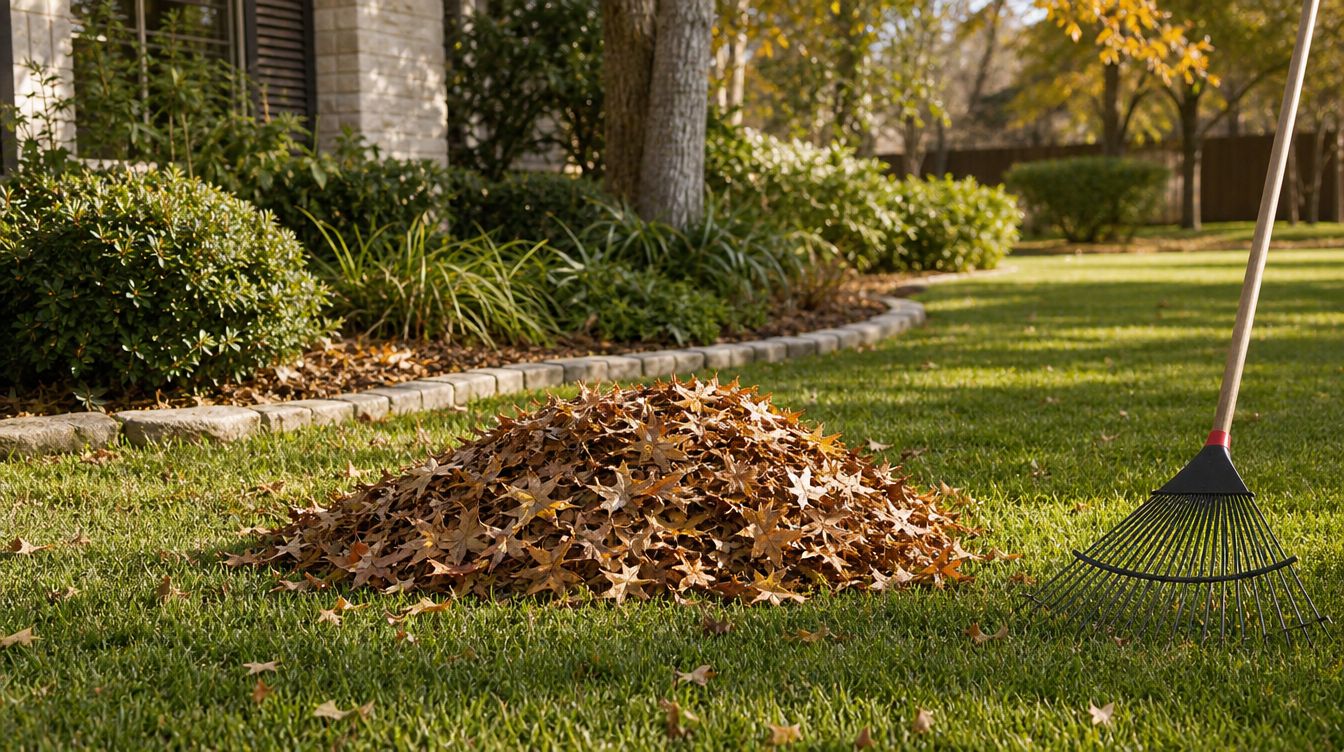
A scattering of leaves is harmless, and mulch-mowing them into the turf actually feeds the soil. The trouble starts when leaves pile into a wet mat. A matted layer blocks sunlight during the very weeks the lawn is storing energy, holds moisture against the blades, and sets up perfect conditions for fungus. St. Augustine suffers the worst under leaf mats. The rule is simple: if you can no longer see grass through the leaves, it is time to mow them in or haul them off, and repeat as the trees keep dropping.
Last Call for Aeration
Core aeration needs to happen while warm-season grass is still growing strongly enough to refill the holes, and that window closes fast in fall. September is generally fine, October is pushing it, and by November the grass is headed to sleep and cannot heal. If your lawn had a compaction problem all summer, water sheeting off, a screwdriver that will not push into the soil, get aeration on the schedule now or plan it for late spring.
Ease the Watering Back
Summer watering schedules overshoot badly in fall. As highs drop out of the 90s, the lawn's demand falls with them, and soil kept constantly damp through cool October nights is exactly what brown patch fungus wants, especially on St. Augustine. Cut back to roughly once a week as temperatures moderate, water in the morning only, and let rain do its share. If circular brown patches show up anyway, reduce the water further before you reach for a fungicide, because the moisture is usually the root cause.
Once the lawn is buttoned up for winter, our crews trade mowers for ladders, because November in this business means holiday lighting season. If you want the yard handled and the house glowing before Thanksgiving, it is worth getting on the list early, and the lawn will be resting easy underneath the display.
