

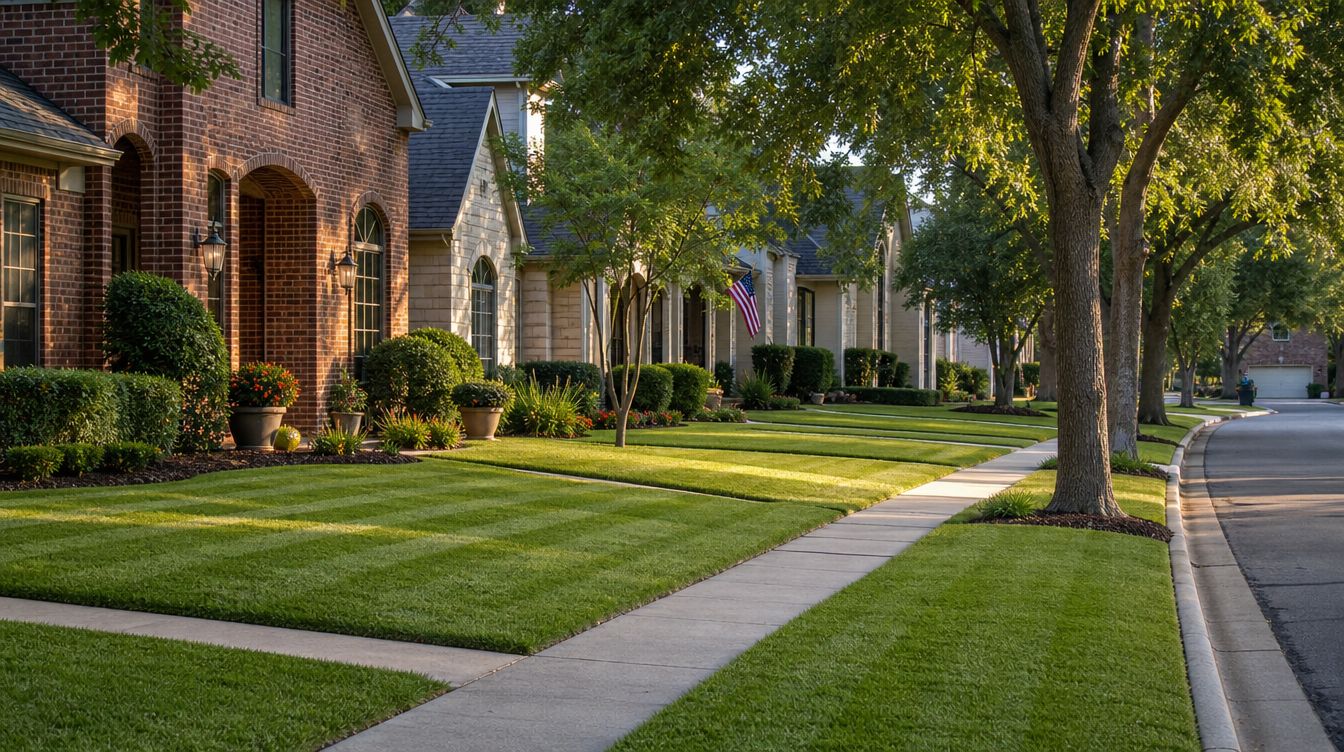
Drive down any street in Rockwall, Heath, or Fate and nearly every lawn you pass is one of three grasses: bermuda, St. Augustine, or zoysia. All three are warm-season grasses, which means they green up in spring, grow hard through our 100 degree summers, and go tan and dormant after the first hard freeze. Past that, they behave very differently, and knowing which one you have changes how you mow it, how you water it, and what problems to watch for.
Bermuda, the Full-Sun Workhorse
Bermuda is the most common grass in Rockwall County, and there are good reasons for that. It loves heat, handles drought better than the other two, and repairs itself quickly because it spreads by both above-ground runners and underground rhizomes. You can identify it by its fine, narrow blades and dense, low growth. Rub a sprig between your fingers and you will feel how wiry it is.
The catch is sun. Bermuda wants 7 or more hours of direct light a day. Plant it under a mature red oak and it thins to bare dirt no matter what you spread on it. Mow common bermuda at 1.5 to 2 inches, weekly in summer. Hybrid varieties like TifTuf and Tifway 419 tolerate a shorter cut if you mow often enough to keep up.
St. Augustine, the Shade Handler
St. Augustine is the wide-bladed, coarse-textured grass you see on older, tree-heavy lots. It spreads by thick above-ground runners and builds a lush, spongy carpet. It is the best warm-season choice for filtered shade, though it still needs 4 to 5 hours of sun to hold density. Raleigh is the variety on most local lawns. Mow it tall, 3 to 4 inches, and taller in the shady spots.
Its weaknesses are real. It is the thirstiest of the three, the most cold-tender, and it hosts the county's two most common turf problems: brown patch fungus in spring and fall, and chinch bugs in the heat of summer. The February 2021 freeze killed St. Augustine across DFW while bermuda next door shrugged it off.
Zoysia, Dense and Deliberate
Zoysia splits the difference. Medium blade width, better shade tolerance than bermuda, and a carpet so dense that weeds have a hard time finding daylight. The tradeoffs are patience and price. Zoysia sod costs more, establishes slowly, and recovers slowly from damage, so a spot that bermuda would heal in three weeks might take zoysia a full season. Mow most varieties at 1.5 to 2.5 inches with a sharp blade, because the stiff leaves tear on a dull one.
Which One Belongs in Your Yard
The short version:
- Full sun, kids, dogs, budget-minded: bermuda. It takes abuse and comes back.
- Mature trees and filtered light: St. Augustine, and accept that it wants more water and more watching.
- Decent sun, patient owner, showpiece lawn: zoysia.
One thing you do not need to worry much about is the soil. All three grow well in our blackland prairie clay as long as water drains and the sprinklers are dialed in. When a lawn fails around here, the cause is almost always shade or watering habits, not the dirt.
If you are not sure what is growing in your yard, that is a ten-second diagnosis for a crew that mows Rockwall County lawns every week. Milliken's handles weekly mowing and maintenance at the right height for each grass type, which is half the battle for turf health.
