

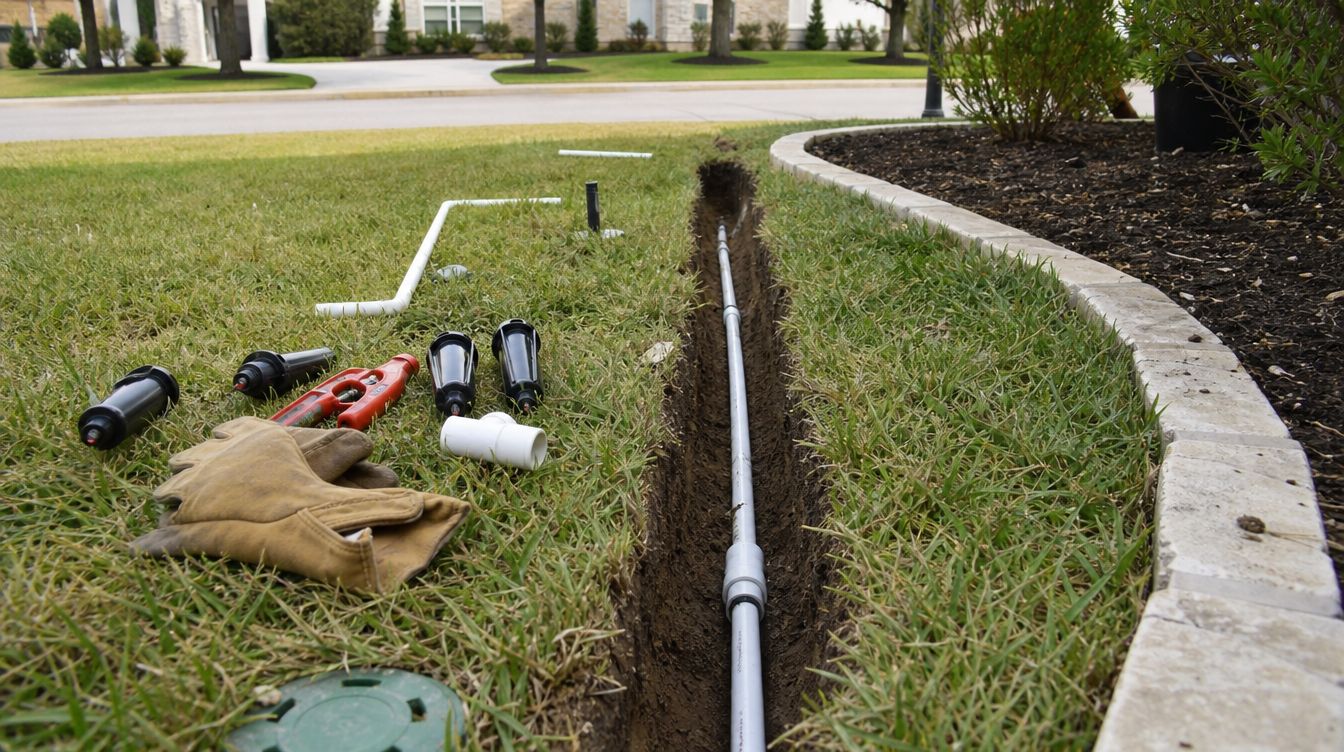
Most of the sad lawns we see in July are not underwatered. They are badly watered: a little bit every day, at the wrong time, with half of it running down the curb. Watering right in North Texas comes down to three habits, and none of them cost money.
How Much Water a Lawn Actually Needs
A healthy bermuda or St. Augustine lawn typically needs about 1 inch of water per week in summer, counting rain. During a long stretch of 100 degree days you might stretch that to 1.25 or 1.5 inches. The goal is fewer, deeper waterings, usually two per week, so moisture reaches 4 to 6 inches down and roots follow it. Daily shallow watering trains roots to live in the top inch of soil, which is exactly where they cook in August.
Do not guess at inches. Set out five or six straight-sided cans, tuna cans work fine, across a zone and run it for 15 minutes. Measure what landed, average it, and do the math. Spray heads often put down around 1.5 inches per hour, rotors closer to half an inch, so two zones with the same runtime can deliver wildly different water.
Cycle and Soak, the Clay Soil Rule
Blackland prairie clay absorbs water slowly, often around a quarter inch per hour once it dries and tightens. Run a spray zone for 30 straight minutes and much of it sheets off into the street. The fix is cycle and soak: split the runtime into two or three shorter cycles with 30 to 60 minutes between them. The first cycle softens the surface, the later ones soak in. Most controllers can do this automatically with a start-time or soak setting, and it is the single biggest improvement most Rockwall County systems can make.
Water Early, and Mind Your City's Schedule
Start zones before sunrise and be finished by 9 or 10 in the morning. Evening watering leaves grass wet all night, which is an open invitation to fungus. Midday watering just loses too much to evaporation and wind.
Also check your city's rules before you set the controller. Most cities in our area run summer watering schedules, commonly a twice-weekly maximum with no irrigation between 10 a.m. and 6 p.m., and the details vary by town and by year. A twice-weekly schedule fits deep-and-infrequent watering perfectly, so restrictions and good agronomy point the same direction.
Give the System a Ten-Minute Audit
A perfect schedule cannot fix broken hardware. A few times each season, run each zone and walk it:
- Tilted or sunken heads spraying into the dirt or the fence.
- Blocked spray where shrubs have grown into the pattern.
- Misting instead of droplets, which usually means pressure is too high and water is drifting away.
- Geysers or soggy spots that point to a broken head or a leak below grade.
- Dry crescents that match a head that stopped rotating.
Those dry crescent-shaped patches get blamed on grubs and fungus constantly, and half the time the culprit is a 12 dollar part.
If your audit turns up problems, or your lawn has mystery dry spots you cannot chase down, Milliken's licensed irrigation crew handles sprinkler checkups and repairs all over Rockwall County. A tuned system usually pays for itself on the water bill. Call (214) 478-6335 and we will take a look.
